
A seller in High Meadow Ranch calls her agent on day 11 of a 30-day contract. The option period ended the day before. Earnest money is technically locked in. Then the title company emails to say the buyer still has a legal path to walk away, and it has nothing to do with the option period at all. The resale certificate just arrived, three days late, and the buyer's paperwork gives them a fresh window to review it and reconsider.
Most people assume the option period is the only door a buyer can walk through before closing. In a mandatory-membership community like High Meadow Ranch, it isn't. The Community Association's own paperwork runs on a separate legal clock, and if nobody starts that clock the moment a home hits the market, it can quietly outlast the option period and hand the buyer leverage nobody negotiated for.
The Paperwork Clock Runs on Its Own Schedule
High Meadow Ranch is governed by a mandatory Property Owners Association, which means every resale carries a resale certificate requirement under Texas Property Code Chapter 207. The statute itself gives the association up to 10 business days to deliver the subdivision information and resale certificate once a written request comes in, and the certificate has to be dated no earlier than 60 days before delivery. State law caps the preparation fee at $375, with a $75 ceiling on updates.
Ten business days sounds routine until you compare it to how short most option periods actually run. Houston Association of Realtors commentary on the resale certificate process notes that option periods rarely stretch past 10 days in the first place. That means the association's own delivery window can, by itself, consume the entire option period with little room to spare.
Here is where the second clock starts. The TREC-promulgated Addendum for Property Subject to Mandatory Membership in a Property Owners Association, known on contracts as TXR-1922, gives the buyer a further right to terminate within a set number of days after actually receiving that resale certificate, or to terminate any time before closing if it never shows up at all. Texas REALTORS' own guidance to members describes this plainly: depending on which option is chosen in Paragraph A, a buyer can walk away within days of receiving the paperwork, earnest money intact.
Put those two clocks side by side and the picture gets clearer.
| Option Period | POA Resale Certificate Window | |
|---|---|---|
| What starts it | Effective date of contract | Written request to the association |
| Typical length in this market | Rarely longer than 10 days | Up to 10 business days to deliver, then a further review right once received |
| What happens if it lapses unaddressed | Buyer's general walk-away right ends | Buyer can still terminate on receipt, or indefinitely if the certificate never arrives |
| Who controls the trigger | Buyer, by paying the option fee | Seller or agent, by requesting the paperwork |
The practical result is that the option period protects the buyer's right to walk away for any reason. The resale certificate window protects the buyer's right to walk away for association-specific reasons, and it does not start ticking until someone actually orders the document. A seller who waits until week two of a contract to request it hands the buyer a second option period they never priced into their offer.
Two Offices, One Closing
High Meadow Ranch complicates this further by splitting its paperwork across two separate organizations. The Community Association's day-to-day management, including dues, assessments, and resale certificates, runs through SBB Community Management. Architectural review, meaning anything related to new construction or exterior changes, runs through a different administrator, KMI, which reviews plan submissions under the community's Architectural Control guidelines.
For a straightforward resale of an existing home, that split rarely matters. The request goes to SBB, the certificate comes back, and the closing proceeds on schedule. It matters more for anyone buying a lot with plans to build, or buying a resale with the intention of adding a structure. The HMR Declaration of Covenants, Conditions and Restrictions specifically blocks any ACC plan review if the owner has outstanding assessments or fines, or unresolved violations, at the time of submission. That means a buyer who closes on a lot with a lingering dues dispute can find their building plans stuck at KMI's desk until SBB clears the account. Two offices, one closing, and a dependency between them that a title company won't necessarily flag unless someone asks.
What Backing Up to the Fairway Actually Restricts
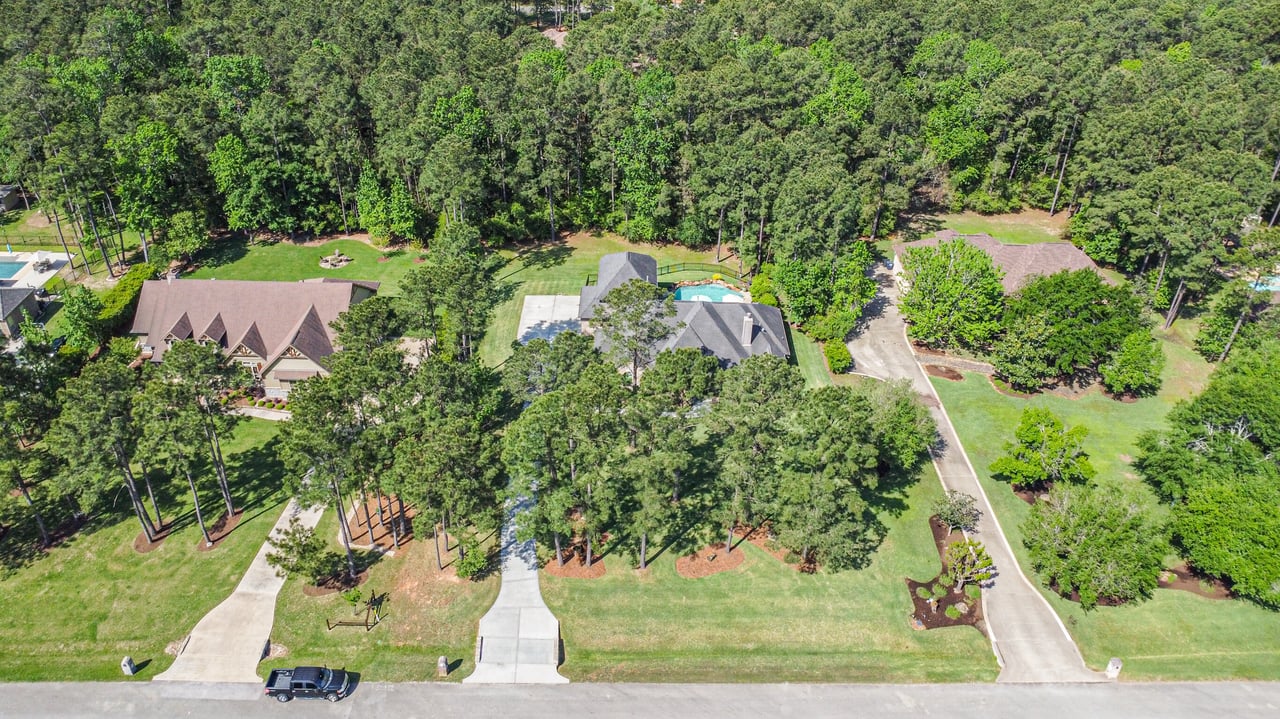
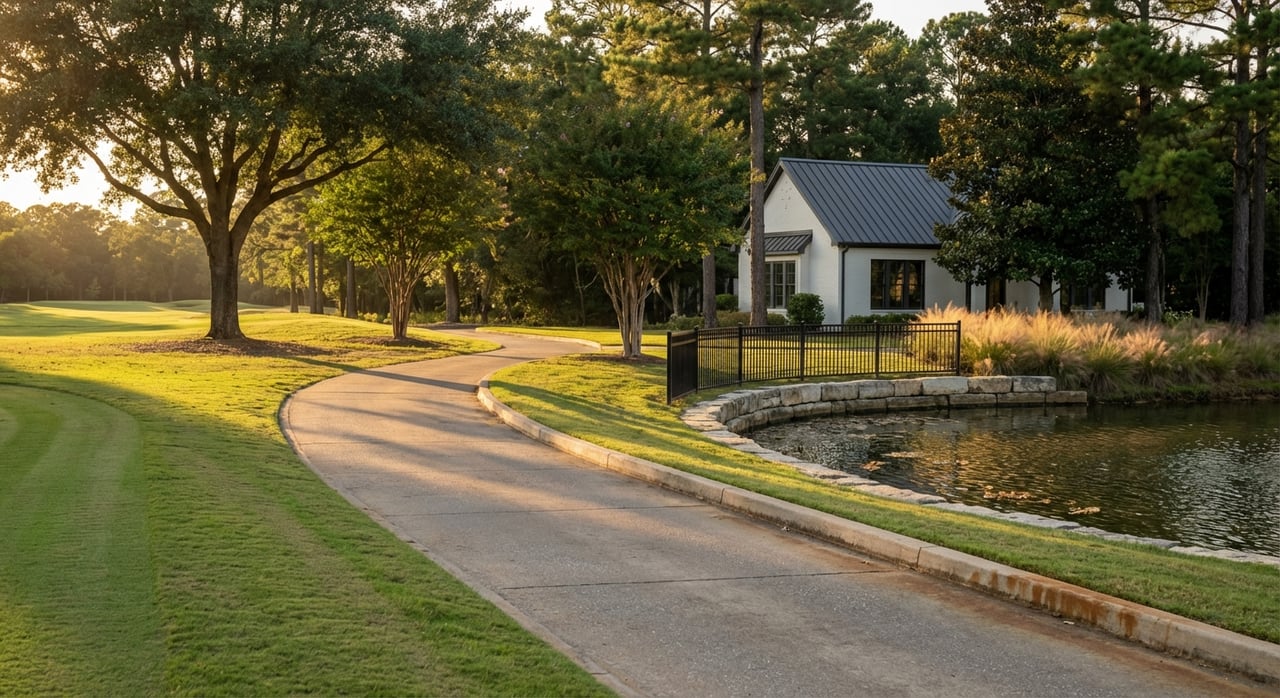
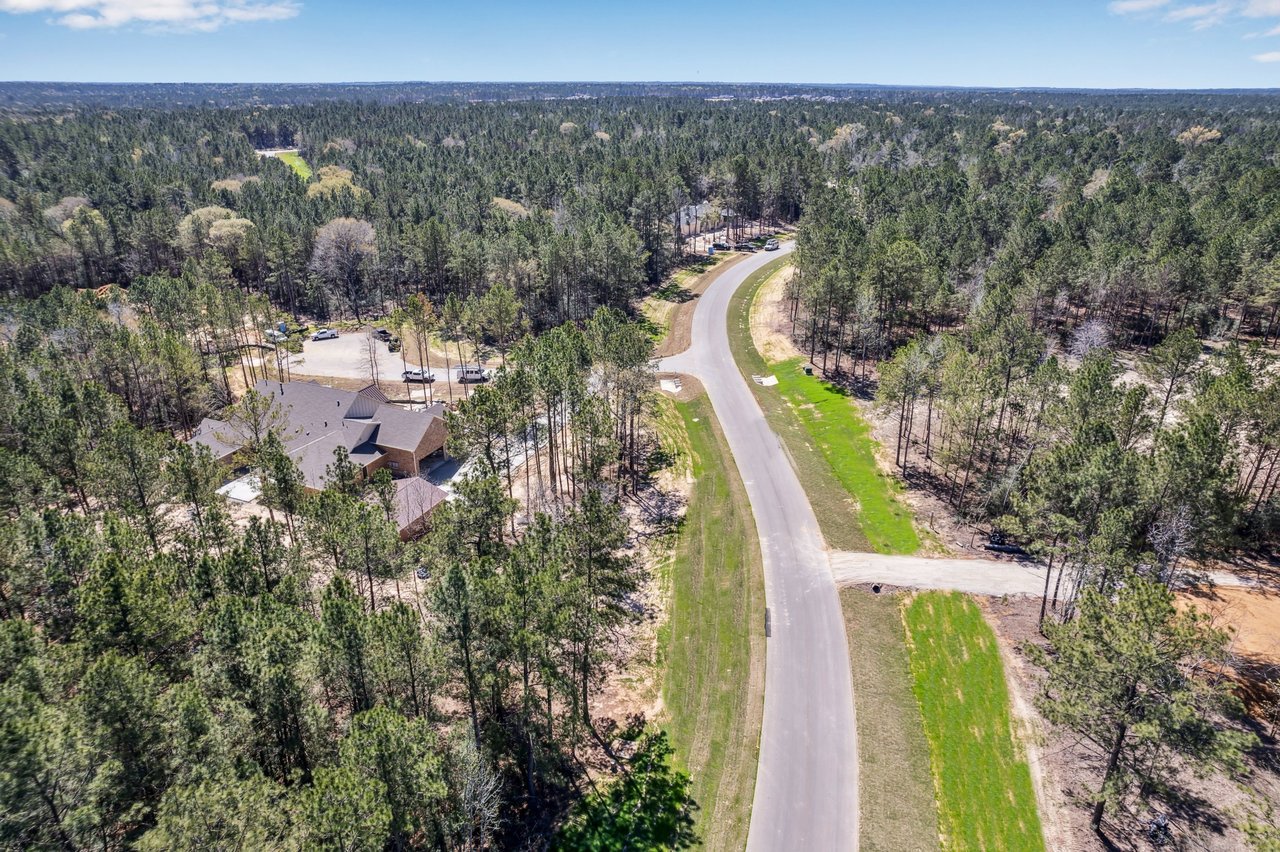
High Meadow Ranch was built around three 6-hole loops of golf course designed by David Ogrin and Tim Nugent, which means a meaningful share of the community's lots share a rear property line with the course itself. On paper, a golf-course lot and an interior lot in the same section can look identical. In the Declaration, they are not treated the same.
Section 13 of the HMR Declaration applies specifically to golf-course lots, and it changes the rules in both directions. Rear setbacks on these lots follow their own line, typically at least 25 feet from the property line abutting the course, and certain sections carry their own variations worth confirming before a buyer plans an addition. At the same time, the Declaration allows open gazebos and picnic pavilions on golf-course lots to sit closer to the course than the standard rear setback would otherwise permit, capped at 500 square feet. Landscaping requirements on these lots apply to both the front and back yard, not just the street-facing side, which is a different obligation than an interior lot carries.
Layered on top of all of this is a community-wide requirement that applies to every new home in High Meadow Ranch regardless of lot type: an aerobic septic system, installed and registered according to state and local regulations, since the community sits outside municipal sewer service. For a buyer comparing a golf-course lot to an interior lot, the difference isn't just the view. It's a different setback line, a different landscaping obligation, and in some cases a different set of allowable structures in the backyard.
Building the Sequence That Actually Protects Both Sides
None of this is complicated once it's on a timeline instead of buried in a declaration. For a seller, the fix is simple: request the resale certificate from SBB Community Management the same day the home goes on the market, not after an offer arrives. That single step keeps the association's 10-business-day window running in parallel with the option period instead of trailing behind it, and it closes off the scenario where a buyer's review right opens up after the seller assumed the deal was locked.
For a buyer, particularly one looking at a golf-course lot or planning any exterior addition, the sequence runs the other direction. Pull the Section 13 restrictions for that specific lot during the option period, not after closing. Confirm with KMI whether any planned addition, from a pool house to a gazebo, fits inside what the Declaration actually allows for that lot type. And budget the resale certificate fee, up to $375, into closing costs rather than treating it as a surprise line item on the settlement statement.
The properties inside High Meadow Ranch carry more paperwork texture than a typical Magnolia subdivision, split management, lot-specific restrictions, and a mandatory septic standard among them. None of it is disqualifying. All of it is easier to work through when someone starts the clock on day one instead of discovering it on day eleven.
Frequently Asked Questions
Who do I contact for a High Meadow Ranch resale certificate? Resale certificates and account questions go through SBB Community Management, the association's management company. Architectural review for new construction or exterior changes goes through KMI, a separate administrator.
Does the golf-course lot setback rule affect fences, or only larger structures? The Declaration's Section 13 provisions address rear setbacks and landscaping on both the front and back yard for golf-course lots, and specifically permit certain small structures like open gazebos and picnic pavilions closer to the course than the standard setback, capped at 500 square feet. Any specific fence or wall plan should still be confirmed with KMI before submission.
What happens if the resale certificate never arrives before closing? Under the terms of the TREC addendum for mandatory-membership properties, a buyer who never receives the required subdivision information generally retains the right to terminate the contract at any point before closing, with earnest money returned. That is exactly why ordering it early protects sellers as much as it protects buyers.
If you're weighing a purchase or a sale inside High Meadow Ranch and want the paperwork sequence handled correctly from the first day of listing, Tiffany Dixon works this community regularly and can walk you through what to order, when, and from whom. Let's connect and get your free home valuation or start your search.