
"Inspecting and maintaining septic systems can help prevent negative impacts on local water quality and public health," says Nathan Glavy, a Texas A&M AgriLife Extension program specialist. It's a mild sentence for what turns out to be a major source of friction in a Magnolia real estate transaction. Not the roof. Not the foundation. What's buried in the yard.
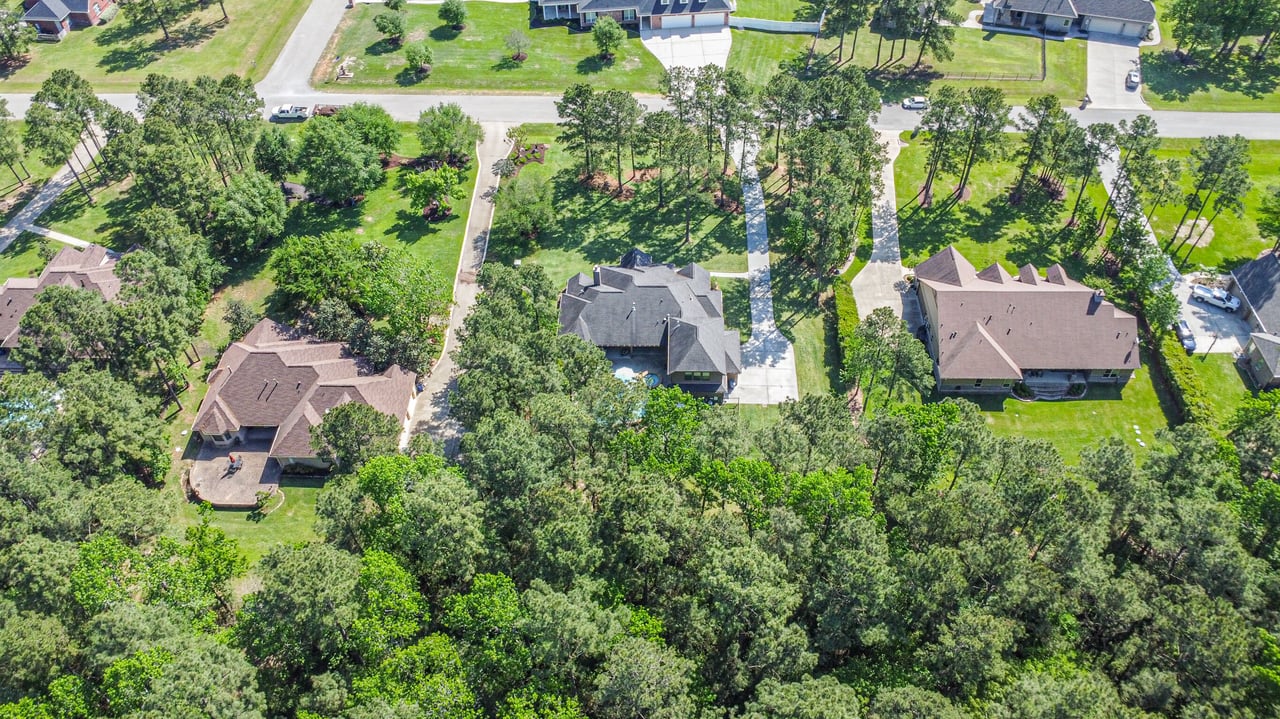
Here's why that matters here: Magnolia's small downtown along FM 1774 anchors a community that sprawls across the northwest part of the county, and nearly all of it sits beyond municipal sewer service. Septic isn't a backup option for a handful of rural lots. It's common across much of the area. Many buyers inherit one. Many sellers have to account for one. And the type of system sitting under any given house is decided by something the listing photos will never show you: the dirt.
The dirt decides more than the floor plan
Local septic contractors describe Magnolia's soil two different ways, and both are true at the same time, just for different lots. Some point to the sandy loam that runs through parts of the area as excellent septic ground. Good percolation lets effluent filter through naturally, and the soil resists the swelling and shrinking that plagues heavier clay elsewhere in the region. That's the soil that supports a basic, low-maintenance conventional system.
Other contractors, working the same zip codes, describe clay pockets around Magnolia and the High Meadow area that behave nothing like that. Clay-heavy soil and smaller lots often rule out a conventional system entirely and require an aerobic treatment unit instead, a mechanical system with air pumps, control panels, and spray heads.
That contradiction isn't a mistake in the research. It's the point. Two homes a quarter mile apart, similar square footage, similar price, similar finish level, can sit on completely different soil and end up with completely different systems. One buyer gets a tank that gets pumped every three to five years and otherwise leaves them alone. The other gets a mechanical system that needs inspections and a maintenance contract, subject to the homeowner-maintenance exception discussed below. The listing sheet won't tell you which one you're getting. The soil already decided.
What a conventional system costs you versus an aerobic one
| Conventional (gravity) system | Aerobic treatment system | |
|---|---|---|
| Typical install cost | Lower, tank-and-drainfield design | Roughly $6,000 to $8,000 per unit |
| Required professional inspections | Pump every 3 to 5 years | Every four months for the first two years, then ongoing per county rules |
| Ongoing homeowner responsibility | Minimal | A signed maintenance contract unless homeowner-performed maintenance is permitted |
| Real estate inspection cost | $300 to $600, statewide range | $300 to $600, same range, but more components that can fail the inspection |
| Expected lifespan with proper maintenance | 25 to 30 years | 25 to 30 years, contingent on maintenance staying current |
The install cost gap alone changes what a property actually costs to own. An aerobic system isn't a one-time expense either. It's a standing obligation, and standing obligations are exactly the kind of thing that get missed when a buyer is comparing two listings on price per square foot.
Montgomery County treats this as a legal filing, not a formality
Montgomery County's own environmental health department spells out two hard rules for residential septic permits: the system must have two tanks, and the tanks cannot sit in a floodplain. Those aren't suggestions. They're permit conditions, checked before construction, filed as part of the public record.
Aerobic systems carry an additional layer under state rule. Because Montgomery County operates as one of roughly 40 Texas counties authorized to enforce the state's on-site sewage facility program directly, the Texas Commission on Environmental Quality's statewide requirement applies locally: an aerobic system must be inspected by a licensed maintenance provider once every four months, and a signed maintenance contract has to stay in force unless the homeowner-maintenance exception applies. After the first two years, some system types allow homeowner-performed maintenance instead of a paid contract, but only if the county hasn't adopted a stricter local rule prohibiting it, so this is worth confirming directly with Montgomery County's permitting office rather than assuming.
Keep the acreage exemption in mind. According to Septic and Well, Texas law exempts single-family homes on 10 acres or more from the septic permitting requirement, as long as no effluent crosses the property line. Plenty of older acreage properties around Magnolia and High Meadow Ranch were built under that exemption and were never formally permitted. Selling one of those properties can trigger a requirement to retroactively permit the system before or during the transaction, so it is worth checking the permit status early in the process.
What happens when the paperwork is missing
According to Texas Septic Guide, FHA appraisers are required to check for visible signs of septic failure, and if they spot surface sewage, odors, or wet spots near the drainfield, a full licensed inspection becomes mandatory before closing. VA appraisers follow a parallel rule under the loan's minimum property requirements. A $300 to $600 inspection is what stands between a buyer and a $10,000 to $20,000 repair after the tank they thought was fine turns out to be full, cracked, or years past its last pump-out.
The most common inspection failures aren't dramatic. A tank that hasn't been pumped is fixable for a few hundred dollars. Drain field saturation is more serious. And a missing or expired aerobic maintenance contract shows up often enough that it's worth checking before you're deep into negotiations, not after.
The consequence of an actually lapsed contract is more than paperwork. According to Aero Septic TX, if a county receives a complaint about a system and finds no active maintenance provider on file, state process gives the homeowner a short window, typically ten days, to sign a new contract and correct the problem, with the matter escalating to Justice of the Peace Court if it isn't resolved. A seller whose aerobic system has a maintenance contract that expired two years ago should check the current requirements.
Who pays for the inspection itself is negotiable and usually settled in the contract. Buyers cover it most often, especially when a lender requires it. Some sellers pay for a pre-listing inspection instead, mainly to remove the uncertainty before a buyer's option period even starts.
What to ask before your option period starts
If you're buying in Magnolia, a few questions up front save real time later:
- Is this a conventional system or an aerobic system, and when was it installed?
- If it's aerobic, can the seller produce a current, unexpired maintenance contract and the last few inspection reports?
- Is the property on 10 acres or more, and if so, was the system ever formally permitted with the county?
- When was the tank last pumped, and is there a receipt?
If you're selling, pulling this information together before you list does more for a smooth closing than almost any other prep step, precisely because it's the one thing a buyer's lender is most likely to flag late in the process.
Frequently asked questions
Do I need a septic inspection if I'm paying cash? Skipping it means taking on whatever condition the system is in without a written record. Given that a $300 to $600 inspection can catch problems that cost ten times that to fix, most buyers choose to get one anyway.
What if the seller's maintenance contract lapsed before I bought the house? If a contract has lapsed, address it as a negotiating point before closing rather than inheriting an unresolved issue.
Does being on 10 acres mean I never have to deal with septic permits? It exempts the system from the initial permitting requirement, provided effluent doesn't cross the property line, but that exemption doesn't necessarily follow the property through a sale. Check with the county before assuming a legacy system is fully in the clear.
None of this is a reason to avoid buying or selling in Magnolia. It's a reason to ask the septic question as early as the school district question or the commute question. If you're weighing a purchase or a listing anywhere in Magnolia or the surrounding Montgomery County communities, Tiffany Dixon can walk you through exactly what's on file for a specific property before you're inside an option period with money on the line. Let's connect and get your questions answered before they complicate closing.
This article is general information, not legal, tax or financial advice. Consult a qualified professional about your situation.